A list displays a set of records from a table.
Users can search, sort, filter, and edit data in lists. Lists may be embedded in forms and may be hierarchical (have sublists).
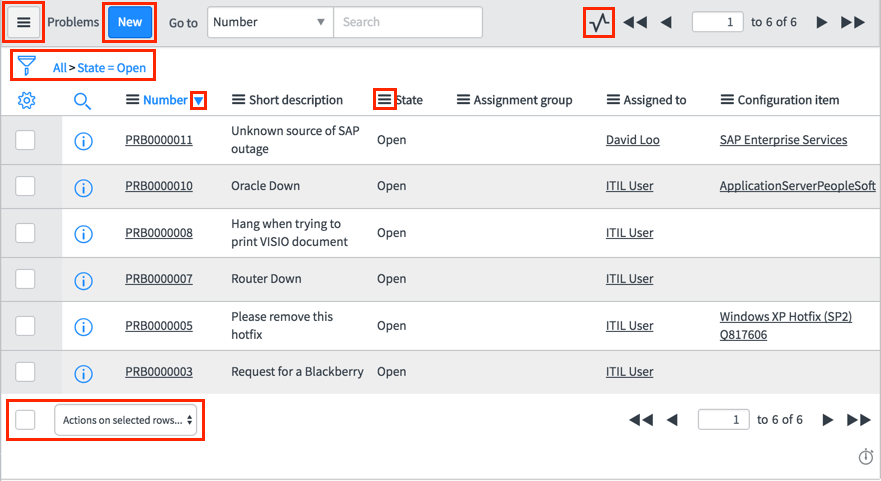
The list interface consists of a title bar, filters and breadcrumbs, columns of data, and a footer. Each column in a list corresponds to a field on the table.
Watch the twelve-minute video User Interface | Getting Started with Lists for an in-depth introduction to list functionality. For more info Servicenow Admin Training
A response time indicator () may appear at the bottom right of some lists to indicate the processing time required to display the list.
There are two versions of lists available. Companies with large or complex datasets, or those accustomed to the features in List v2 should avoid activating the list v3 plugin.
Record list
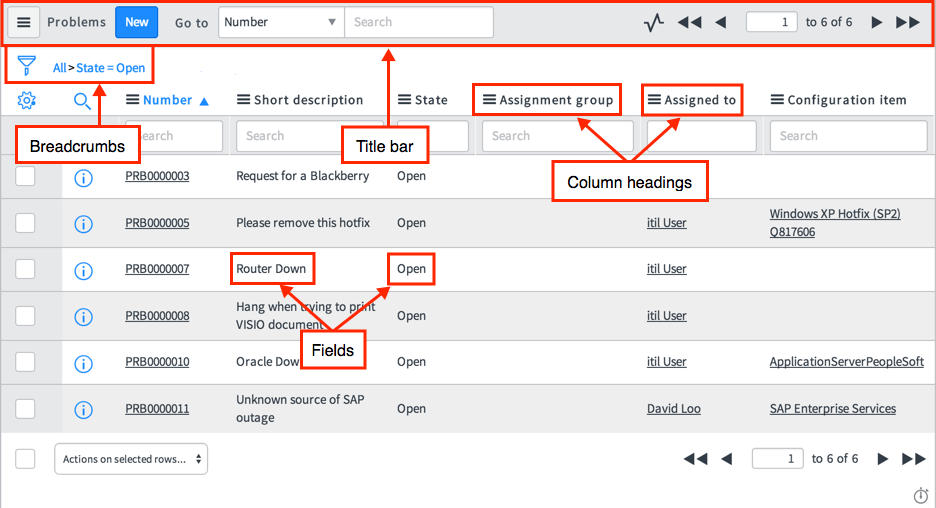
List features and actions
The list interface consists of a title bar, filters and breadcrumbs, and columns of data. Each of these components provides features and lets you act on the list and the displayed records. There are two list versions: List v2 and List v3.List v2 view features, menus, and actions. For more additional info Servicenow Online Training
Hierarchical lists:
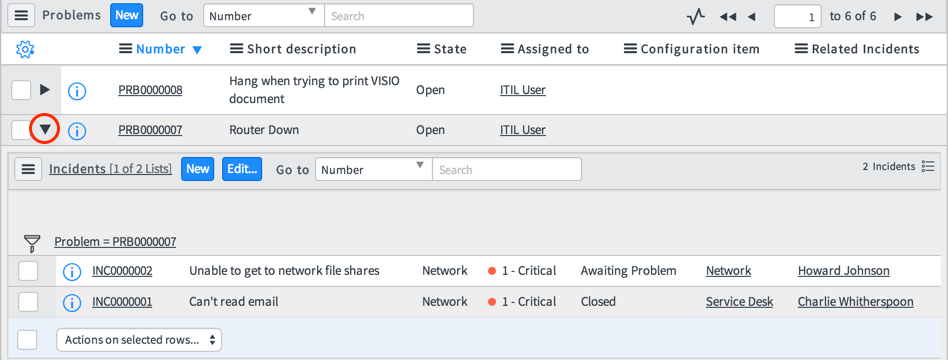
Hierarchical lists allow users to view records from related lists directly from a v2 list without navigating to a form.
Note: Hierarchical lists are not supported in List v3. Tables that have hierarchical lists enabled always display in List v2.
Lists can have sublists in a hierarchy that can also be accessed in list view. To expand or collapse the related lists on a record in a hierarchical list, click the arrow () beside the reference icon. Learn practical skills from Servicenow Training
Hierarchical list:
Detail rows
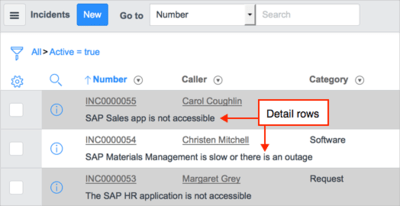
Detail rows, when enabled, appear below the field row for each record and display the value of a specified field. For example, the detail row might display the short description for each incident in a list. Detail rows support the same functionality as fields, including links, editing capabilities, and access to the context menu.
Note: When a field is designated as the source for the list detail rows, the system hides the list column for that field.
Detail rows:
Administrators can enable detail rows and add them to v2 lists (UI15 or later required).
- List fields:
Fields display data and provide certain functions.
- Configure and use list functions:
All users can interact with lists for the tables their role permits them to access. Some list and column header menu options are controlled by permissions grated to the user role.
- Activity streams in list view:
Stream live activity information for all records on the current list.
- Search a list:
You can search a list to find information quickly. The list title bar includes options for searching the list. Administrators can enable text searches for any list.
- Grouped lists:
Grouping aggregates a list by a field and displays the record count per group. Grouping can help you find data quickly by organizing and providing a summary of search or filter results.
- Filters and breadcrumbs:
A filter is a set of conditions applied to a table to help you find and work with a subset of the data in that table.
- Methods for list edits:
Users can edit data in lists using various methods.
- Personal lists:
Users can create personal lists to customize which columns appear and the order in which they appear. Personal lists modify a specific list view according to individual preferences.
- Comparison of List v2 and List v3
There are several differences between List v2 and List v3. List v3 is no longer available for new deployments. If you are already using list v3, you may continue to do so.
- List v3 split mode:
In List v3, split mode lets users view a list and form side by side, in a split pane layout.
To get in-depth knowledge, enroll for a live free demo on Servicenow Certification
 programming land