Workday vs. Oracle for human capital management (HCM) is always going to be a difficult comparison. It wasn’t long ago that Oracle took over PeopleSoft to gain a better position in the HR space, forcing the PeopleSoft CEO to leave and start another people-focused ERP company built on cloud technology. Workday is that company.
Workday vs. Oracle HCM Cloud are just two of many full-service business software choices that include a comprehensive human capital management tool. Get recommendations for the best HCM for your medium or enterprise company via our Product Selection Tool. It only takes five minutes, and we’ll give you a shortlist of the top HR software options for you. Click the image below to get started.
Oracle is consistently ranked as one of the largest and most profitable companies in the world, but profitability doesn’t always equal innovation. Oracle’s long-standing love affair with on-premise technology made it difficult for the company to pivot to the cloud. Workday was built for the cloud. From its beginning it could push faster updates, it contained better data analytics tools, and it had a more user-friendly user interface. Oracle’s on-premise systems needed extensive modernization to compete with the cloud giants. For more info Workday Training
Oracle has come a long way since those early days of fighting to keep up with the innovators, and Oracle Cloud HCM is—in part—the result of that struggle. The sleek interface is built on the solid foundation of Oracle’s cloud database offerings. It’s a user-friendly face on powerful data connectivity and tool integrations across business departments. And while Oracle has gained ground in usability, Workday’s innovation has slowed somewhat. That makes these two choices a fairly even match.
At a high level, there’s not much difference between today’s Oracle HCM and Workday HCM. This article details the differences in the human resources management and talent management modules for both systems, and briefly discusses suggestions for a smooth implementation.
Workday vs. Oracle: an overview
Workday is a cloud database-based human capital management software for medium to enterprise-sized companies. Human resource and talent management modules give CHROs and directors a high-level understanding of how hiring, firing, retention, and individual employee performance drive revenue growth.
The cloud infrastructure gives HR employees access to analytics and benchmarks, and the entire system is available via browser or mobile app. Visual workflows and drag-and-drop tools make team reorganizations and big-picture updates fast and easy.
Employees can access their performance, benefits, and even recommended learning all from a single interface.
Oracle is a software company that builds database-driven business software, including human capital management (HCM) software. The HCM tools include three separate modules for human resource management, talent management, and workforce management.
Each of these is available in cloud deployments with browser and mobile interfaces for full service access. The employee interface includes AI-driven action suggestions, company news, and individual and team analytics.
Workday vs. Oracle: feature comparison
The Workday and Oracle HCM software systems include a wide variety of tools to manage human resources across medium and enterprise businesses. You’ll find many of the same tools in these systems, as they perform essential functions for businesses that know that employees drive their companies. Learn more from Workday Online Course
Human resource management
Human resource management systems in both Workday and Oracle emphasize the financial importance of employees as talent resources and company revenue-drivers. Both tools are built to connect to the company’s revenue and financial databases, brining HR directly into the overall revenue growth model.
This helps CFOs and CHROs come together to make financial decisions on all the possible information, without significant retooling and IT input.
Analytics and predictive modeling
Workday’s workforce planning tools give HR leadership insight into the total cost of workforce from a historical perspective. They can use this information to build predictive models that make better use of the company’s human resources. This includes building hiring pipelines and recruiting models, using popular spreadsheet and project management visualizations to drive hiring projects, and get budget approvals in a timeline that works for hiring.
Oracle’s workforce modeling uses the internal data intelligence tools to understand possible hiring and reorganization needs based on potential business situations. The workforce predictions tool uses business intelligence modeling and data visualization tools to bring insights to all the hiring and employment data that companies already make. Learn more details from Workday Integration Training
And these tools are built for HR teams with little coding knowledge, not for data analysts. HR executives can predict high performance and future openings based on individual metrics, giving the HR team a head start for hiring.
Compensation and financial trending
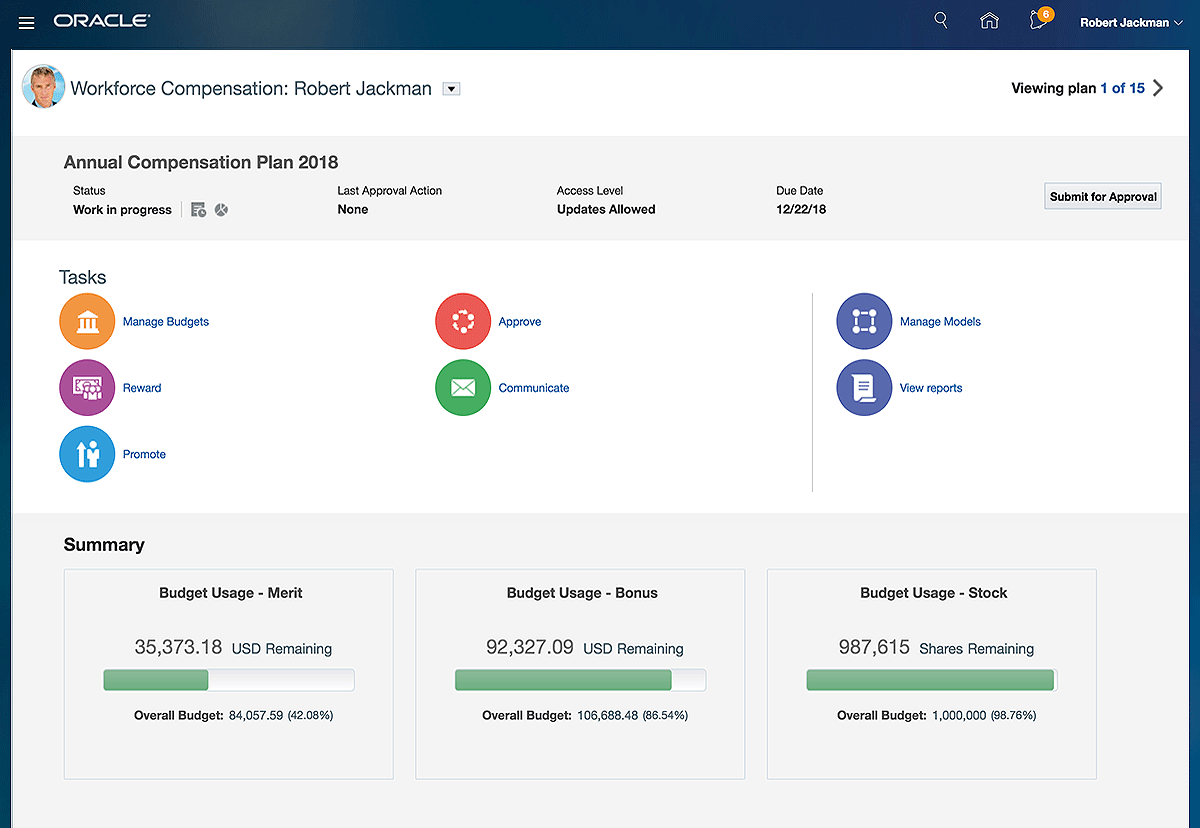
Workday and Oracle provide HCM tools that allow corporate leaders to look at human resources within the larger context of the company’s overall financials. This advanced contextual data means executives can make better-informed decisions regarding salaries, hiring, and benefits.
Workday provides industry benchmarks and uses the software’s database analytics to help companies stay competitive in the marketplace and attract top talent. Companies can add compensation incentives like bonuses, awards, and stock options according to custom rules.
Oracle gives executives access to total compensation metrics including base salary, bonuses, and extras. HR teams can control compensation in the administrative portal and design compensation plans based on business strategy.
To get in-depth knowledge, enroll for a live free demo on Workday Online Training
 programming land